banner.JPG (1211253 bytes)

Caboolture Gliding Club

| Home Page  | Articles Index | Articles Archive |

Repairs to GRS

16-Jun-12

     
 A recent tow-out incident resulted in some slight damage to the tail of GRS (Garrett Russell and Barry McCarthy's ESKA6) which led to the discovery of water-damage to the internal structure of the tail. The repairs to the tail and to the nose (where sanding back over years had resulted in some areas of the plywood nose skin becoming quite thin) have been undertaken by Bernard "Speedy" Gonsalves in Hangar 22 over recent weeks under the expert guidance and supervision of Bert Persson. Speedy has also displayed his spray-painting skills on the old girl (she turned 50 recently) with an excellent cosmetic touch up to cover the scars from  the surgery.
 
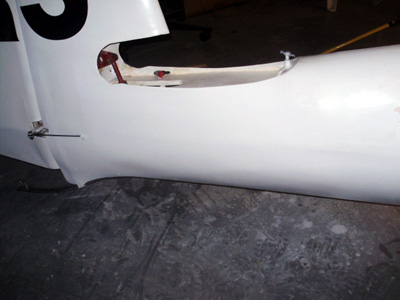
  Holes had to be cut through both side of the fuselage at the tail to facilitate access to the internal woodwork that required repairing and replacement.  
             
   
   Bare bones restored.  
      
   
    Top half epoxied.  
     
   Glued and stapled on..  
          
 
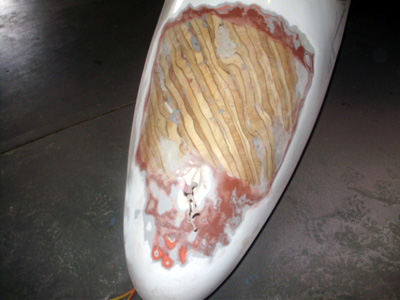
   Initial sanding off of the paintwork on the nose revealed this curvy pattern in the plywood resulting from previous work on the nose. Had the plywood been sanded back consistently when that work had been done, the lines that are visible would have been more parallel and consistent in their width apart.  
     
    
  Rumour has it that Speedy was so inspired by the beautiful curves that appeared in the sanded plywood on the nose of GRS that he has taken up full size wood sculpturing and created some even more appealing curves.   


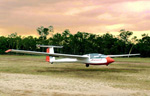
    Garrett Russell's research (at the time that GRS was purchased) came up with this photo of a K6 that is believed to share the same original colour scheme. Speedy's sanding back of the fuselage over recent weeks supports the premise that its fuselage was at one stage red.  
     
    
    Looking splendid after completion of the final phase of the nose-job!  
      
 
   GRS's tail section after Speedy's re-spraying of the plywood skin at the tail (where quite large holes had to be cut in to facilitate the internal repairs to the water-damaged internal structure).